
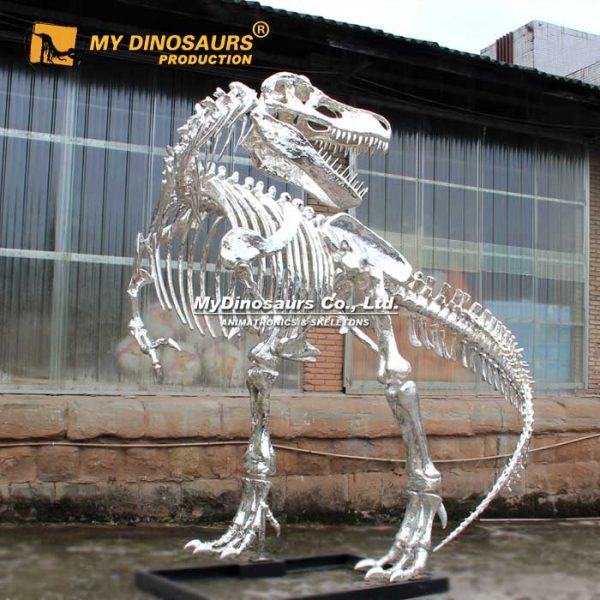
Most people have encountered impressive moving figures in theme parks, film studios or museum exhibitions and wondered how they work. Some of these lifelike creations are animatronics, while others rely on robotics. Both fields blend engineering, design and motion control, yet they serve different purposes and operate in different ways. As technology evolves, the line between them can seem increasingly blurry, which often leaves audiences unsure about what distinguishes one from the other.
Interest in realistic mechanical creatures continues to grow, especially as museums integrate displays like dinosaur skeletons that interact with visitors through sound, motion or educational demonstrations. Understanding the clear differences between animatronics and robotics helps audiences appreciate their design and functionality on a deeper level.
What Are Animatronics
Creating Lifelike Performance
Animatronics refers to mechanical figures designed to imitate realistic living movements. They are often found in theme parks, film productions and museum exhibits. Their purpose is to deliver a convincing visual performance rather than complete complex tasks. A successful animatronic creature focuses on expressive motion, appearance and timing.
Core Characteristics of Animatronics
Animatronics typically include these features:
-
Sculpted bodies made from silicone, foam, fiberglass or specialized skins
-
Internal steel structures supporting motion mechanisms
-
Pneumatic or hydraulic systems for smooth movements
-
Preprogrammed sequences that repeat consistently
-
Integrated sound effects to enhance realism
Unlike advanced robots, animatronics do not adapt to new situations. They follow predesigned movements that align with storytelling or exhibit design.
Where Animatronics Are Commonly Used
-
Dinosaur exhibits in natural history museums
-
Theme park attractions featuring animals or characters
-
Film sets requiring creatures that interact with actors
-
Educational displays that demonstrate prehistoric behavior
In these environments, emotional impact and audience immersion matter more than computation or autonomous problem solving.
What Are Robotics
Designed for Function Rather Than Performance
Robotics centers on machines built to perform tasks efficiently, repeatedly or autonomously. Robots are engineered with mechanical systems, sensors and software that help them achieve practical outcomes. They appear in manufacturing, healthcare, agriculture, research laboratories and consumer electronics.
Core Characteristics of Robotics
Robots commonly include:
-
Programmable logic controllers or onboard computers
-
Sensors for navigation, detection or analysis
-
Electric motors for precision movement
-
AI systems that allow decision-making
-
Ability to adapt when conditions change
Robots are task-oriented. They focus on problem-solving and productivity rather than lifelike performance.
Where Robotics Are Commonly Used
-
Industrial assembly lines
-
Autonomous cleaning devices
-
Medical surgery assistance
-
Space exploration
-
Research applications where precision is required
Robotics plays a central role in modern automation and innovation.
Key Differences Between Animatronics and Robotics
1. Purpose
-
Animatronics aims to entertain or educate by recreating lifelike motion.
-
Robotics aims to complete a task, improve efficiency or solve a problem.
2. Movement
-
Animatronics uses smooth, expressive motion patterns.
-
Robotics uses precise, functional movements optimized for performance.
3. Control Systems
Animatronics often rely on preprogrammed sequences. Robotics incorporates sensors and feedback loops to react in real time.
4. Materials and Design Priorities
| Feature | Animatronics | Robotics |
|---|---|---|
| Primary Goal | Realistic appearance | Functional performance |
| Movement | Pneumatic or hydraulic | Motor driven |
|
Autonomy |
Low | High |
| Interaction | Often passive | Often interactive |
5. Applications
Animatronics help tell stories, while robotics handles work tasks, making them fundamentally different in design philosophy.
How Animatronics and Robotics Overlap
Although distinct, the two fields intersect in interesting ways:
Interactive Exhibits
Some museums combine animatronic creatures with robotic sensors to create interactive displays. A dinosaur model may move when visitors approach or respond to voice cues.
Crossover Technologies
Both disciplines benefit from advancements in:
-
Motion control software
-
Lightweight materials
-
Advanced motors
-
3D printing for component fabrication
These shared technologies help designers push the boundaries of realism and efficiency.
Examples in Educational and Public Settings
Theme Parks
Animatronics remain a cornerstone of themed entertainment. Their ability to evoke emotion and surprise makes them suitable for immersive environments. Robotics helps support ride systems, safety controls and automated show elements.
Museums
Displays often feature animated creatures next to static exhibits like reconstructed dinosaur skeletons. Animatronics help bring prehistoric environments to life by showing motion that skeletons alone cannot represent.
Film and Television
Animatronics offer realistic physical interaction for actors, while robotics supports camera automation, special effects and on-set machinery.
Why Animatronics Captivate Audiences
Emotional Connection
People respond strongly to movements that feel organic. Animatronics recreate subtle gestures such as blinking, breathing or shifting weight, which triggers a sense of life and presence.
Tactile Realism
Unlike CGI, animatronics occupy real space. They cast shadows, reflect light and interact with their environment physically. This makes them ideal for educational installations that seek to replicate natural behavior.
Consistency in Performance
Preprogrammed animation ensures that animatronics deliver the same show every time, which is valuable for large museums or high-attendance theme parks.
Robotics and Its Growing Influence
Smart Automation
Modern robots integrate artificial intelligence and machine learning. They can adjust to real time feedback, making them indispensable in manufacturing and scientific applications.
Human Assistance
Service robots help with cleaning, transport, surgery and even companionship. Their ability to learn and adapt distinguishes them from animatronic creations.
Research and Exploration
Robots explore environments humans cannot, from deep-sea trenches to planetary surfaces.
Choosing Between Animatronics and Robotics for a Project
Organizations often decide between animatronics and robotics based on purpose.
Animatronics Are Best For
-
Exhibits focused on realistic representation
-
Storytelling environments
-
Film and theater productions
-
Creatures that do not require autonomous interaction
Robotics Are Best For
-
Precision tasks
-
Autonomous operations
-
Repetitive work environments
-
Interactive systems requiring feedback
Hybrid Solutions
Some projects benefit from combining both disciplines. A creature may use animatronic skin and structure but include robotic sensors to respond to guests. This fusion allows for realism and interactivity.
Challenges Faced in Both Fields
Engineering Complexity
Creating smooth motion, natural skin textures or autonomous navigation requires multidisciplinary teams.
Maintenance Needs
Mechanical systems require routine inspection and repair. Hydraulics and pneumatics must remain clean and well calibrated.
Cost Considerations
Both animatronics and robotics involve significant investment in engineering, materials, fabrication and long-term care.
Conclusion
Animatronics and robotics share mechanical roots but diverge in purpose, design and capabilities. Animatronics excel at lifelike, expressive performance that engages and educates audiences. Robotics excels at solving complex tasks through precision, adaptability and automation. Exhibits featuring animated creatures alongside traditional pieces like dinosaur skeletons reveal how these fields complement one another in museums and educational spaces.
As technology continues to improve, animatronics will become more realistic and robotics more intelligent. Understanding their differences not only enriches appreciation for these creations but also helps organizations choose the right approach for their goals. Both fields will continue shaping how people experience storytelling, science and innovation.

