
Miguel has been betting on sports since 2015. For the first nine years, he used the same traditional sportsbook, the same debit card, and the same routine of waiting three or four days for his winnings to go into his bank account after a winning week. He didn’t think much about it because he didn’t know it could be different. In March 2026, a friend told him to try a crypto platform before the World Cup started, to see what it was like. He signed up, put 50 euros of USDT on a Champions League semi-final match that same evening. The match finished at about 10 p.m. He asked to leave at 10:08 pm. The money was in his wallet at 10:20 pm. Twelve minutes from the end of the game to the money sitting in an account he controlled completely, with no bank involved at any point and no email from anyone asking him to confirm anything.
He hasn’t used his debit card for sports betting since that night. He didn’t start using Bitcoin or crypto because he believed in it, but because it was much faster. Once you’ve experienced how quickly it is, it’s hard to go back to the slower option.
How crypto platforms went from a side option to an official FIFA partner
The biggest change was what happened in the months before the 2026 World Cup. Kraken, one of the world’s biggest and most well-known crypto exchanges, was chosen to be the official crypto exchange partner for the 2026 FIFA World Cup. It is not a sponsor for a particular area. It’s not just a small logo in the corner of a press release. It is an official partner at the main tournament level. This means it is at the same level as the brands that have held this position for many years. FIFA has also chosen ADI PredictStreet to be its official prediction market partner. This means that the results of matches can be checked on the blockchain using Chainlink oracles. This means that bets on official FIFA-affiliated markets are automatically settled via a smart contract when the oracle reports the final result, with no central operator needed to approve the payout.
A few years ago, both of those sentences would have been guesses about something that might happen in the future. In June 2026, they are just facts about how the biggest sporting event on the planet chose to set up its commercial partnerships.
What prediction markets are doing that traditional sportsbooks cannot replicate
On 25 June, the Netherlands played Tunisia in a group stage match at GEHA Field at Arrowhead Stadium in Kansas City. Before the game started, Polymarket recorded a trading volume of 93,600 dollars based on the result of that single game. One match between two teams, one afternoon, and almost $100,000 is exchanged on a decentralised platform. This is done automatically through a smart contract, rather than through a bookmaker approving a payout. The knockout rounds will generate more than that by a factor of ten, and the final will be even bigger.
Prediction markets work differently from regular sports betting, and this difference is important for people who want to know how odds are set. When you bet at a traditional sportsbook, the bookmaker sets the odds, adds a margin to them, and profits from that margin over time, regardless of individual results. The odds are based on what the bookmaker thinks, with adjustments for their own commercial interests. In a prediction market, you trade contracts with other users. If you think France will win the World Cup and the market is pricing their chance at 25 percent, you buy a contract at 25 cents. If France wins, the contract settles at $1, and you make $0.75 in profit per contract. If they don’t, you lose the 25 cents. The price changes based on what everyone in the market collectively believes. This means it incorporates information faster than a bookmaker’s pricing team can respond, and the margin built into the odds is lower because there is no house taking a cut of every transaction.
Why the platforms that were built for crypto from the start are pulling ahead
There’s a big difference between a regular sportsbook that started accepting Bitcoin in 2023 and a platform that was built for crypto from the start. The first type treats crypto as an alternative payment method, alongside Visa and bank transfers. The second type built its entire operation around the assumption that users would deposit from wallets, withdraw to wallets, and expect the speed and cost profile of blockchain transactions rather than that of bank transfers. That difference shows up in withdrawal times, the fee structure, how errors at the cashier are handled, and the range of coins and networks the platform supports.
Some of the crypto-native platforms in 2026 have added Telegram bots that let you place a bet without opening a browser at all. Others have built provably fair game systems in which every outcome is mathematically verifiable on the blockchain, so a user can independently verify that the platform did not manipulate the outcome of a casino game or a sports market settlement. That level of transparency is not possible without blockchain infrastructure, and it is becoming a meaningful reason some bettors choose crypto platforms over traditional ones, even in markets where their cards would not be blocked.
What this means for someone who just wants to bet on the World Cup
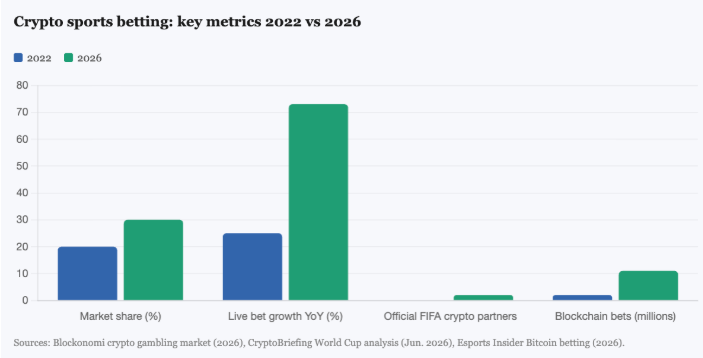
The infrastructure for world cup Bitcoin betting in 2026 is better than it has ever been at any previous tournament. More platforms hold real licences from regulators such as the Malta Gaming Authority and the Gibraltar Gambling Commission. Withdrawal speeds on stablecoin networks are consistently under 15 minutes. The range of markets covers everything a traditional sportsbook offers and often more, including live in-play betting on every one of the 104 matches running through to July 19, player props, corner and card markets, group winner futures, and outright winner markets that have been shifting fast as the knockout rounds take shape.
The practical advice for anyone setting up for the first time is the same advice Miguel would give: buy USDT rather than Bitcoin for betting, because stablecoins are pegged to the dollar. Your bankroll does not change in value between deposits and withdrawals while the tournament is running. Keep any Bitcoin exposure in a separate wallet if you want it. Fund your sportsbook account before the day of the match you want to bet on, not during it, because network confirmation times can vary, and the worst moment to find out your deposit is pending is five minutes before kick-off when the odds you wanted are about to move.
The tournament is now in its knockout stages, and every result changes something. The platforms that handle this moment well, the ones that pay out in twelve minutes and do not block deposits and do not ask for a phone call when you try to withdraw, are the ones people will still be using in four years when the next World Cup comes around.
Frequently asked questions about crypto sports platforms and World Cup 2026
Is Kraken an official partner of the 2026 World Cup?
Yes. Kraken was named the official crypto exchange partner of the 2026 FIFA World Cup. FIFA also appointed ADI PredictStreet as its official prediction market partner, with outcomes verified on-chain through Chainlink oracles.
How much was traded on Polymarket during the World Cup 2026 group games?
Polymarket recorded $ 93,600 in volume for a single group-stage match between the Netherlands and Tunisia on June 25. Pre-tournament betting volume across prediction markets was estimated at around $ 2 billion.
What is the difference between a crypto sportsbook and a prediction market?
A crypto sportsbook works like a traditional bookmaker where the platform sets the odds, and you bet against the house. A prediction market lets you trade contracts against other users, with prices set by market demand rather than a bookmaker. Settlement on prediction markets occurs automatically via a smart contract once the result is confirmed.
Why is Bitcoin better for World Cup betting than a bank card?
Card deposits to sports betting sites are tagged with MCC 7995 and get blocked by many banks at rates of 20 to 40 percent. Bitcoin and stablecoin transactions bypass this entirely because they do not go through the bank at all. Withdrawals also arrive in under 15 minutes for stablecoins, compared to 1 to 5 business days for traditional bank transfers.
Should I use Bitcoin or USDT for World Cup betting?
USDT for most people. It stays pegged to the dollar, so your bankroll does not change value during a 40-day tournament. Bitcoin mainchain fees can also be high when the network is busy. USDT on TRC-20 costs almost nothing per transaction and settles consistently in under 15 minutes.