
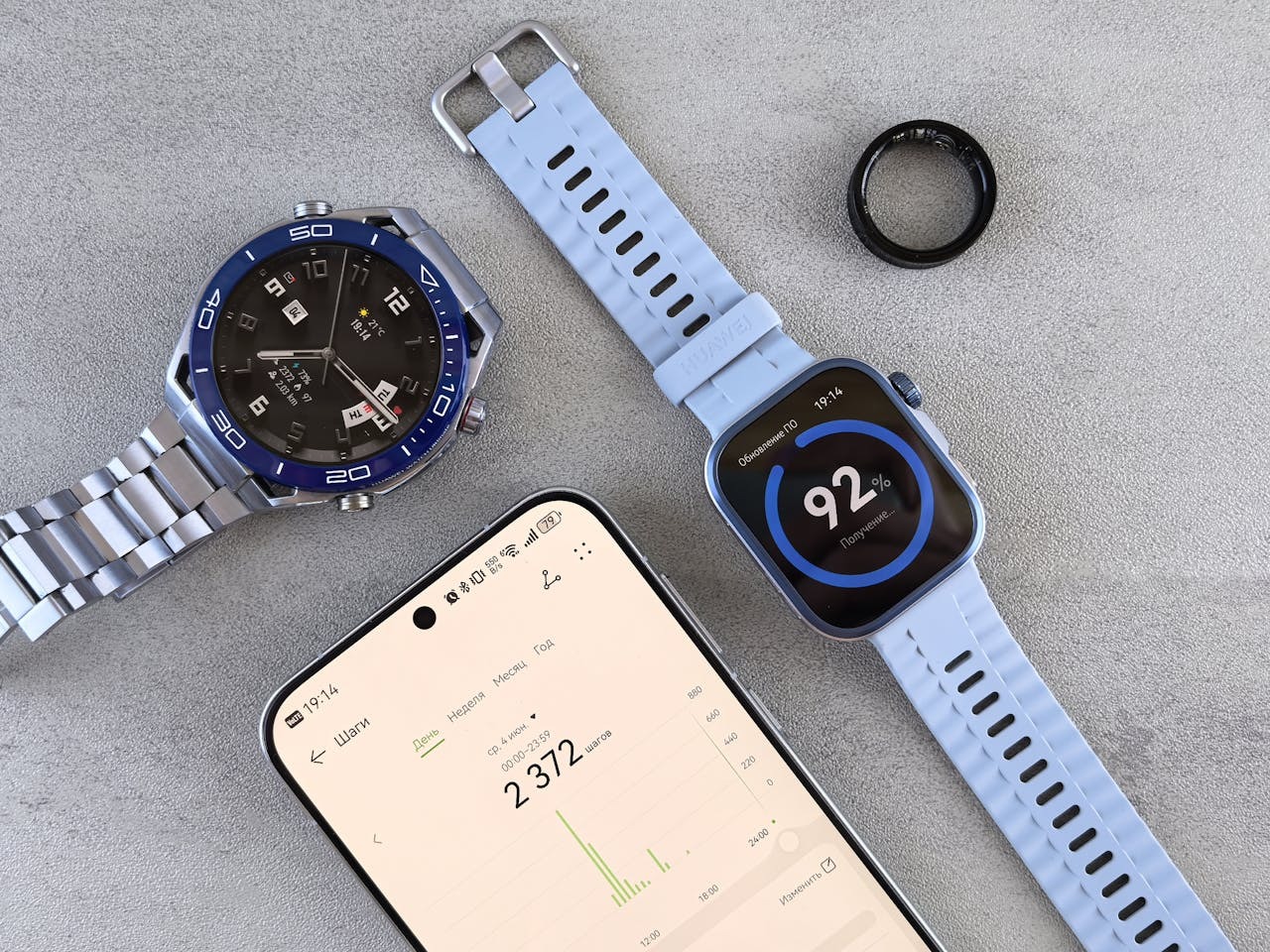
The concept of the Smart City has long promised a future where technology optimizes everything from traffic flow to energy consumption. We have smart grids, autonomous public transport, and sensors on every street corner monitoring noise and air quality. However, for a long time, the human element was left out of this feedback loop. We had data on how toxic the air was, but we had very little personal technology to actually do anything about it.
That is changing rapidly. The intersection of health technology and urban living has given rise to a new category of wearable gadgets. These are no longer just passive trackers counting steps or measuring heart rates. They are active defensive tools designed to help urban dwellers navigate and survive the increasing levels of particulate matter in our megacities. As pollution becomes the invisible antagonist of modern life, our devices are evolving from simple monitors into sophisticated personal protection equipment.
From Quantified Self to Quantified Health
In the early days of wearable tech, the focus was purely on fitness. You wanted to know your pace per kilometer or your calorie burn. Today, the focus has shifted to environmental health. Modern smartwatches now pull real-time API data to warn users when local Air Quality Index (AQI) levels are dangerous.
But knowing the air is bad is only half the battle. It is like a weather app telling you it is raining when you do not have an umbrella. This gap in the market has driven the development of “smart masks” and high-tech respiratory gear. These devices treat breathing not as a passive biological function but as a metric that needs to be optimized and protected.
Leading this charge is the integration of physical filtration with digital intelligence. Companies are realizing that in a smart city, the most critical piece of hardware you own might not be your phone, but the filter standing between your lungs and the street.
The High-Tech Mask: A New Category of Wearable
We need to stop thinking of masks as simple pieces of fabric. In the context of 2026, a high-end anti-pollution mask is a piece of technology. It involves materials science, fluid dynamics, and data connectivity.
A prime example of this evolution is the approach taken by R-pur.com. They have effectively redesigned the mask to function as a high-performance wearable. Unlike standard masks that just sit on the face, next-generation masks use thermal memory foams that react to body heat to create a hermetic seal. This is materials science at work.
Furthermore, the “smart” aspect comes from connectivity. The best modern respiratory gear pairs with mobile applications. These apps do not just track the lifespan of the filter based on time; they calculate it based on the user’s specific exposure to pollutants, their activity level, and the local air quality data. This turns a static accessory into a dynamic health tool that interacts with the smart city infrastructure around it.
How to Choose the Right “Respiratory Wearable” for Cycling
For the urban commuter, specifically the cyclist, the stakes are higher. Cyclists are the “canaries in the coal mine” of the smart city. They move through the heaviest concentrations of nitrogen dioxide and PM2.5 particulate matter.
If you are looking to integrate a respiratory device into your tech ecosystem, you cannot simply buy a generic dust mask. You need to evaluate it with the same scrutiny you would apply to a new smartphone or laptop. Here is the technical guide to choosing the right mask for high-intensity urban mobility.
1. Analyze the Filtration Specifications (The Hardware)
In the tech world, we look at processor speed. In respiratory tech, we look at particle size capture. Standard masks often stop at PM2.5, which refers to particles 2.5 microns in diameter. However, the most dangerous byproduct of urban traffic is the nanoparticle (PM0.1). These are small enough to enter the bloodstream. When selecting a mask, look for “Nanofiltration” capabilities. The filter media should be multi-layered, utilizing electrostatic charges to trap these microscopic particles. If the spec sheet does not explicitly mention nanoparticles or PM0.05 protection, the hardware is outdated.
2. Verify the Sealing Mechanism (The Interface)
A device is only as good as its user interface. For a mask, the interface is the seal against the skin. This is the most common point of failure. A rigid mask on a moving face will leak. Look for “adaptive” sealing technologies. This usually involves high-grade thermal memory foam or medical-grade silicone. This material needs to decouple the movement of the jaw and neck from the position of the mask. If you are a cyclist checking a blind spot, the mask must float with you. If the seal breaks, the device is offline, and you are breathing unfiltered air.
3. Check for Thermal Regulation (The Cooling System)
Just as a high-performance gaming PC needs cooling fans, a high-performance mask needs airflow management. Cycling generates massive amounts of heat and moisture. A sealed mask without proper extraction valves will become a swamp within minutes. You need to identify masks with high-flow extraction valves. These are check-valves that snap shut during inhalation (to force air through the filter) but open completely during exhalation to dump heat and CO2. This prevents the “overheating” of the user and keeps the internal climate of the mask dry.
4. Integration with Your Existing Gear
In the tech world, we talk about the “ecosystem.” Your mask is part of your cycling ecosystem. It needs to physically integrate with your helmet and your eyewear. A common issue is the “fogging bug,” where breath escapes upwards and blinds the rider. This is a design flaw. A properly engineered smart mask will have directed airflow channels that push air downward, away from your optics. If you wear glasses or high-end cycling shades, this feature is non-negotiable.
The Future of Urban Health is Proactive
The narrative of the smart city is shifting. It is no longer just about optimizing traffic lights or garbage collection. It is about optimizing human health in dense environments.
We are moving toward a future where our wearables will communicate directly with city infrastructure. Imagine a mask that vibrates to tell you to change your route because a sensor two blocks away detected a spike in diesel fumes. Until that level of integration is commonplace, the responsibility falls on the user to equip themselves with the best available hardware.
Brands like R-PUR are bridging this gap, offering a glimpse into a future where protection is seamless, data-driven, and highly effective. In a world where the air is becoming an increasingly variable variable, treating your mask as a sophisticated gadget rather than a disposable accessory is the smartest upgrade you can make.