
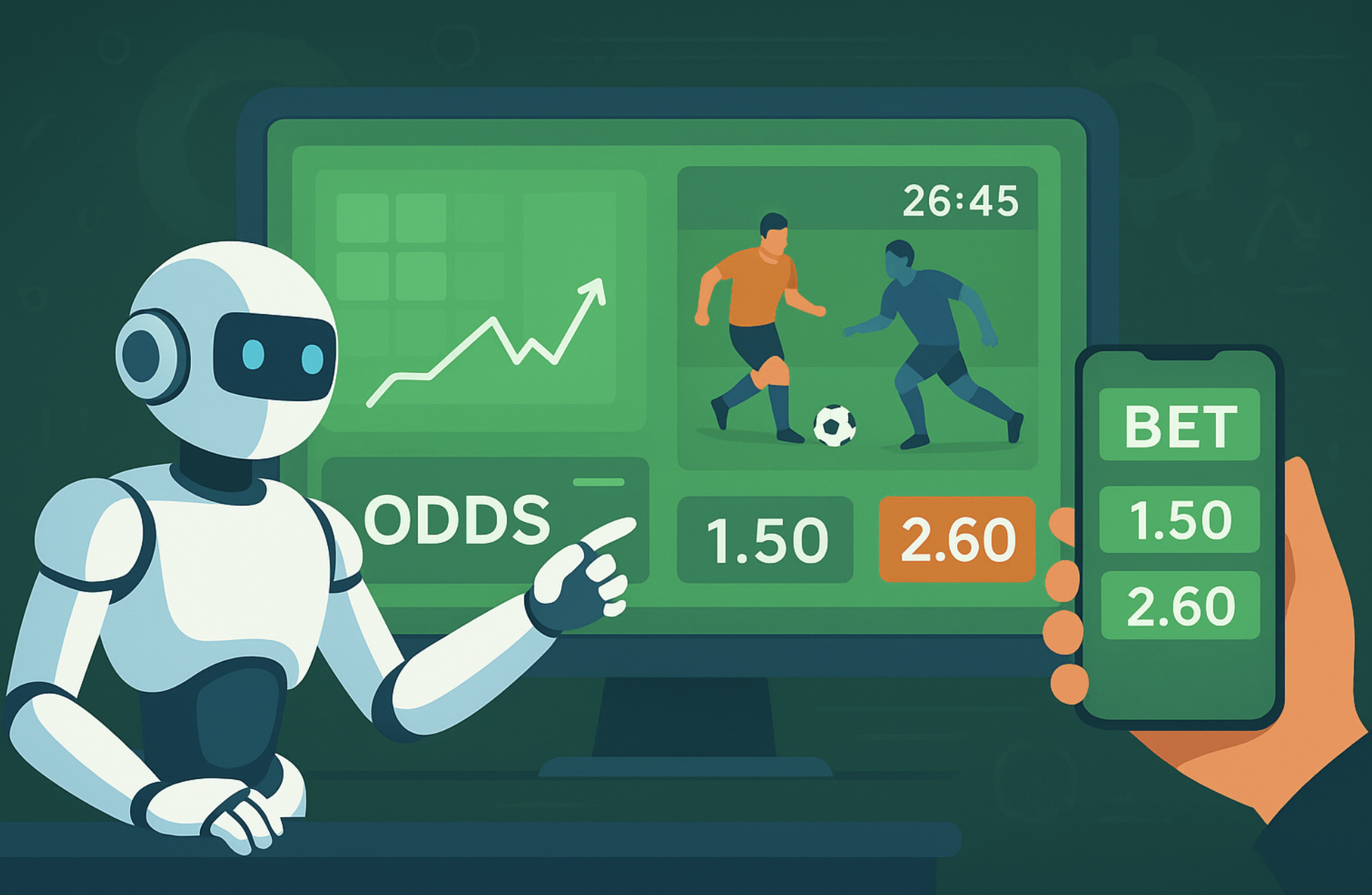
Enterprise IT teams building real-time decision systems — fraud detection, dynamic pricing, risk scoring — could do worse than studying how modern sportsbooks solve a genuinely similar problem: setting odds that update multiple times per second during a live event, at scale, without the kind of latency or error tolerance most consumer applications can afford. It's a niche corner of applied AI, but the underlying engineering challenges map onto a surprising number of enterprise use cases, and the solutions the iGaming sector has converged on are worth understanding on their own technical merits.
The Core Technical Problem: Latency Meets High-Stakes Accuracy
Real-time odds pricing sits at an unusually demanding intersection of two requirements that normally trade off against each other: sub-second latency and high-confidence probability estimation. A pricing model that's slow but accurate is commercially useless in a live-betting context, where a market needs to update within milliseconds of an on-field event. A model that's fast but poorly calibrated exposes the operator to systematic financial risk, since a mispriced market gets exploited by informed bettors faster than a slow-to-detect pricing model can correct itself.
This is a genuinely instructive parallel for enterprise systems facing similar trade-offs — fraud detection systems that need to score a transaction before it completes, ad-bidding systems that need to price inventory in the milliseconds between a page load and an ad auction closing, or dynamic pricing engines in e-commerce that need to adjust to demand signals faster than a competitor can undercut. The engineering patterns that solve latency-versus-accuracy trade-offs in one domain generally transfer reasonably well to the others, because the underlying constraint — make a high-confidence decision faster than the environment can exploit a slow one — is structurally similar.
How Modern Odds-Pricing Models Actually Work
The architecture behind real-time sports odds pricing typically layers several model types rather than relying on a single approach. A baseline statistical model, trained on historical performance data, establishes a prior probability distribution before an event even begins. During the live event, a separate real-time model ingests streaming data — for a football match, this might include possession, shot location, and momentum indicators — and continuously updates the baseline probability as the event unfolds.
This layered approach exists specifically because a single end-to-end model trying to do both jobs at once tends to underperform on at least one dimension: models optimized for pre-event accuracy using deep historical data often struggle to update fast enough on sparse in-event signals, while models built purely for rapid in-event updates often lack the depth of prior data needed to establish an accurate baseline in the first place. Layering separates these concerns cleanly, letting each model do the job it's actually well-suited for.
Platforms like Fair Crown login, which run real-time markets across sports and esports, illustrate this layered approach in practice — esports in particular offers an interesting technical case study, since granular, digitally-native event logs (every in-game action timestamped and structured) provide cleaner real-time input data than traditional sports, where much of the relevant signal has to be extracted from video or manually logged event data with inherent latency and noise.
Why Model Calibration Matters More Than Raw Accuracy Here
A subtlety that often gets lost in enterprise AI conversations focused purely on accuracy metrics: for a pricing system, calibration matters more than raw predictive accuracy in isolation. A model can be directionally accurate — correctly identifying the more likely outcome most of the time — while still being poorly calibrated, meaning its confidence levels don't actually match real-world outcome frequencies. In a betting context, poor calibration is directly and immediately exploitable: if a model consistently underestimates the true probability of a specific outcome type, sophisticated bettors will systematically target exactly that mispricing until the model is corrected.
This is a genuinely useful lesson for enterprise risk-scoring systems generally, where the same principle applies even though the stakes look different: a fraud-detection model that's directionally accurate but poorly calibrated will either flag too many legitimate transactions (hurting the customer experience) or miss too many fraudulent ones (creating direct financial exposure), and in both cases, the fix isn't necessarily "make the model more accurate" in the abstract — it's specifically improving calibration, which is a distinct and often under-prioritized optimization target.
Cybersecurity Lessons From How Casinos Handle Data
Beyond the pricing-model architecture, licensed online casinos and sportsbooks operate under an unusually demanding security and compliance regime that enterprise IT teams outside the gambling sector rarely have to match — and the defensive patterns they've built are worth studying regardless of industry.
Real-time fraud and anomaly detection at transaction scale. Licensed operators process enormous transaction volumes and are required to detect fraudulent account activity, bonus abuse, and money-laundering patterns in near real time, often under explicit regulatory reporting obligations with strict time windows. The anomaly-detection architectures built for this — layering rule-based flags with machine-learning behavioral models trained on historical fraud patterns — are directly transferable to enterprise fraud detection in banking, e-commerce, and payments.
Identity verification under regulatory pressure. Age verification and know-your-customer requirements force licensed gambling operators to build robust, low-friction identity verification pipelines that balance genuine security against user experience — a challenge nearly identical to what enterprise onboarding systems in fintech and other regulated industries face, and one where the gambling sector's solutions (document verification AI, biometric matching, layered risk-based verification depth) are genuinely instructive.
Defense against automated abuse at scale. Licensed betting platforms are a persistent target for bot-driven promotional abuse, credential-stuffing attacks, and automated bonus exploitation, which has pushed the sector toward sophisticated behavioral bot-detection systems that distinguish genuine user behavior from automated abuse patterns in real time — architecture that maps directly onto enterprise concerns around account takeover and automated fraud in any consumer-facing platform.
Why This Sector Moves Fast on These Problems
It's worth understanding why iGaming platforms have generally been ahead of the curve on these specific technical challenges: the direct, immediate financial cost of getting it wrong. A mispriced market or an undetected fraud pattern translates into measurable, immediate financial loss in a way that's harder to quantify (though not necessarily less real) in many enterprise contexts. This tight, direct feedback loop between technical failure and financial cost has pushed the sector toward genuinely sophisticated, battle-tested solutions faster than many industries with more diffuse or delayed cost signals for similar technical failures.
For enterprise IT teams evaluating their own real-time risk and pricing systems, this is a useful framing question to ask internally: does your organization have a similarly tight, direct feedback loop between a model's failure and a measurable cost, and if not, is that absence of pressure part of why the underlying system hasn't been pushed toward the same level of technical maturity?
The Bottom Line
Real-time odds pricing is a genuinely demanding applied-AI problem, combining strict latency requirements with high-stakes calibration accuracy in a way that offers useful architectural lessons for enterprise systems facing similar trade-offs. Beyond the pricing model itself, the security and compliance infrastructure licensed gambling operators have built under sustained regulatory pressure — real-time fraud detection, identity verification pipelines, and automated-abuse defense — represents a mature, battle-tested body of engineering practice that enterprise IT teams outside the gambling sector would do well to study directly rather than reinventing from scratch.
Frequently Asked Questions
How does AI set real-time betting odds? Modern odds pricing typically layers a baseline statistical model trained on historical data with a separate real-time model that continuously updates probabilities based on live event data, balancing speed and accuracy.
Why is model calibration important in odds pricing? A model can be directionally accurate while still being poorly calibrated, meaning its confidence levels don't match real outcome frequencies — a flaw that's directly and immediately exploitable in a betting context.
What can enterprise IT learn from casino cybersecurity? Licensed gambling operators have built mature real-time fraud detection, identity verification, and automated-abuse defense systems under strict regulatory pressure, offering transferable architecture for fraud detection and account security in other industries.
Why is esports data useful for real-time pricing models? Esports generates granular, digitally-native event logs with precise timestamps, providing cleaner real-time input data for pricing models than traditional sports, where signal often has to be extracted from video with inherent latency.
What is the biggest technical challenge in real-time odds pricing? Balancing sub-second latency with high-confidence probability estimation, since a slow but accurate model is commercially useless in live markets, while a fast but poorly calibrated one creates exploitable financial risk.
This article was produced in partnership with GGBet. 18+. Please gamble responsibly.