
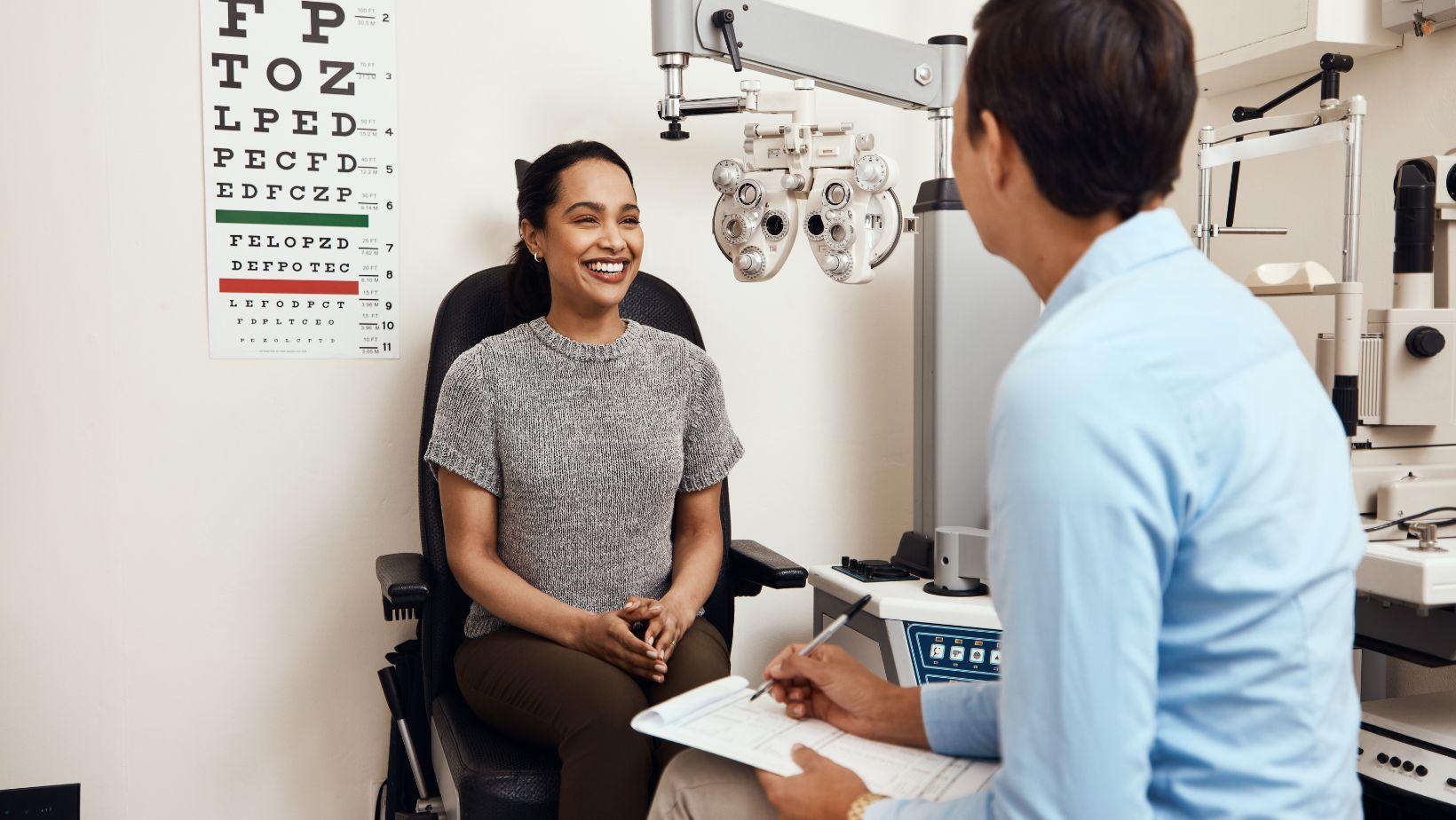
Vision care once followed a largely fixed path. A patient visited an eye doctor, received an examination and selected eyewear from the optical store connected to the practice. Adjustments, payments and collection usually happened in person.
That model remains important, but it is no longer the only way people move through the process. Online scheduling, patient portals, digital prescription delivery, virtual frame previews and home shipping have made several parts of vision care more convenient.
The change does not mean that every stage can safely be completed through a phone or computer. Online tools are most useful when they simplify access and purchasing while qualified professionals continue to handle diagnosis, treatment and individual clinical decisions.
Appointments Often Begin Online
The digital vision-care journey frequently begins before the patient enters a clinic. Online scheduling platforms allow people to compare available times, choose a location and receive reminders without calling during office hours.
Digital forms can also reduce administrative work at the appointment. Patients may enter insurance information, list medications and describe current concerns in advance. This gives the provider more time to review relevant information before the examination begins.
The process still needs to be accessible. A scheduling system should work with screen readers, provide clear text and offer a telephone alternative. Patients should not be excluded from care because they cannot use a particular application.
Healthcare forms also contain sensitive information. Clinics need secure systems and should request only the details necessary for providing care.
Online Vision Tests Have Important Limits
The phrase “online eye test” can describe several different services. A basic visual acuity check may ask the user to identify letters on a screen. A digital refraction tool may estimate the lens power needed to correct blurred vision. Some services allow a licensed professional to review the results remotely where regulations permit.
These tools may provide useful information for eligible adults in limited situations, such as checking whether an existing prescription still produces clear vision. They are not equivalent to a comprehensive eye examination.
Refraction is only one part of eye care. A complete examination may evaluate how the eyes focus and work together, examine eye structures and look for signs of disease. Some conditions develop without obvious symptoms, so seeing clearly does not necessarily mean the eyes are healthy.
Anyone considering an online test should ask exactly what it measures, who reviews the result and whether the service is permitted in their location. People with sudden vision changes, eye pain, flashes of light, new floaters or missing areas of vision should seek professional care rather than relying on a remote screening tool.
Telehealth Can Support Follow-Up Care
Telehealth can be useful when a patient needs to discuss results, ask a medication question or complete an appropriate follow-up visit. It may reduce travel for people who live far from an eye care provider or have difficulty reaching a clinic.
A video appointment can also help a professional observe visible symptoms and decide whether an in-person examination is necessary. However, the camera on a consumer device cannot replace specialized equipment used to examine the inside of the eye or measure certain aspects of vision.
The standard of care should remain appropriate whether communication happens in person or remotely. Patients need to know the provider’s credentials, how personal information will be protected and what to do if urgent symptoms develop.
Telehealth works best as part of a connected care system. A remote conversation can direct the patient toward the right next step instead of being presented as a solution for every condition.
Digital Prescriptions Give Patients More Choice
Receiving a prescription electronically makes it easier to store, retrieve and share with a retailer. A patient does not need to keep track of one paper document or return to the clinic simply to request another copy.
In the United States, the Federal Trade Commission’s updated Eyeglass Rule guidance explains that patients are entitled to receive a copy of their eyeglass prescription after completing an examination, at no additional charge. The prescription may be delivered on paper or electronically when the patient agrees to digital delivery.
This portability separates the clinical examination from the retail purchase. Patients can compare frame styles, lens options, prices and services before deciding where to order.
The document should be current, complete and issued by a qualified prescriber. Customers should not attempt to estimate or alter prescription values themselves.
Ordering Eyewear From Home
Once a customer has a valid prescription, an online retailer can guide the person through frame and lens selection. Filters may organize products by size, shape, color and material, while measurement guides explain how to compare a new frame with an existing pair.
Someone ordering glasses from home should review more than the frame’s appearance. Frame width, bridge fit, temple length, lens material and prescription compatibility all affect the final result. Strong prescriptions and progressive lenses may require additional measurements or limit which frames are suitable.
Product pages should clearly explain what information the customer needs to submit. They should also show the full cost as lens options and treatments are added.
Online ordering is convenient, but it places greater responsibility on the customer to enter information accurately. The prescription should be copied carefully, including plus and minus signs. If any part is unclear, the retailer or prescriber should be contacted before the order is completed.
Virtual Try-On Reduces Some Uncertainty
One challenge of buying eyewear online is not knowing how a frame will look on the face. Virtual try-on tools attempt to solve this by using a phone or computer camera to create a digital preview.
These tools can help shoppers compare shapes and colors. They may also encourage customers to consider styles they would not have selected from product photographs alone.
A digital preview cannot fully represent physical fit. It may not show how the bridge rests on the nose, whether the temples feel tight or how the weight is distributed. Color can also look different because of lighting and screen settings.
Virtual try-on should therefore be treated as a selection aid rather than a guarantee. Accurate measurements, clear return terms and access to customer support remain important.
The camera permissions requested by the tool should also be reviewed. Customers need to understand whether facial images are processed temporarily, stored or used for another purpose.
Home Delivery Makes the Final Step Easier
Home shipping removes the need to return to a store simply to collect an order. This can be particularly valuable for people with limited transportation, demanding schedules or few optical retailers nearby.
The package should include information about checking the product, caring for the lenses and requesting support. Customers need a clear process for reporting damage, an incorrect prescription or an uncomfortable fit.
Some adjustments can be difficult to complete at home. A frame may sit unevenly or slide because the temples or nose pads need professional attention. Retailers can address this through physical locations, partner optical stores or reimbursement for local adjustments.
Fast delivery is useful, but accurate production is more important. Correct lens placement and quality checks directly affect how comfortable the finished product feels.
Returns Are More Complex for Prescription Products
Returning ordinary clothing is relatively simple. Prescription eyewear is customized, which makes return policies more complicated.
Before ordering, customers should check whether the retailer offers a remake, refund or store credit if the frame does not fit. The policy should explain how prescription errors are handled and how much time the customer has to report a problem.
A discomfort period does not always mean the product was manufactured incorrectly. Some people need time to adapt to a new prescription, lens material or progressive design. Significant blur, headaches or distortion should still be reported rather than ignored.
The retailer may ask the customer to confirm the prescription or have the product inspected. Clear communication among the customer, seller and prescriber can help identify whether the issue comes from the prescription, measurements, frame fit or lens production.
Digital Tools Can Improve Continuity
Patient portals and retailer accounts can make future care more organized. A portal may store examination results and appointment history, while a retail account can preserve previous frame measurements and lens choices.
This information can help customers compare a new order with one that worked well in the past. Reminders may also encourage timely examinations or notify the wearer that a prescription is approaching its expiration date.
Stored information must be protected. Vision prescriptions, medical notes, facial measurements and payment details can all be sensitive. Services should use secure accounts and explain how long information is retained.
Users should create strong passwords, activate multifactor authentication when available and avoid sending prescriptions through unsecured channels.
The Future Is Likely to Be Hybrid
Vision care is not moving entirely online. It is becoming a combination of digital convenience and in-person expertise.
A patient may schedule through an app, complete the examination at a clinic, receive the prescription electronically and order eyewear for home delivery. Another person may research frames online but visit a store for fitting and adjustments.
This hybrid model gives people more control over where each stage happens. It can expand access and reduce unnecessary trips without treating healthcare as a simple online transaction.
The most successful services will be honest about what technology can do. Digital tools can simplify scheduling, communication, comparison and delivery. Comprehensive examinations and professional judgment remain essential for protecting eye health.
Convenience creates real value when it strengthens the path to appropriate care rather than encouraging people to skip it.