
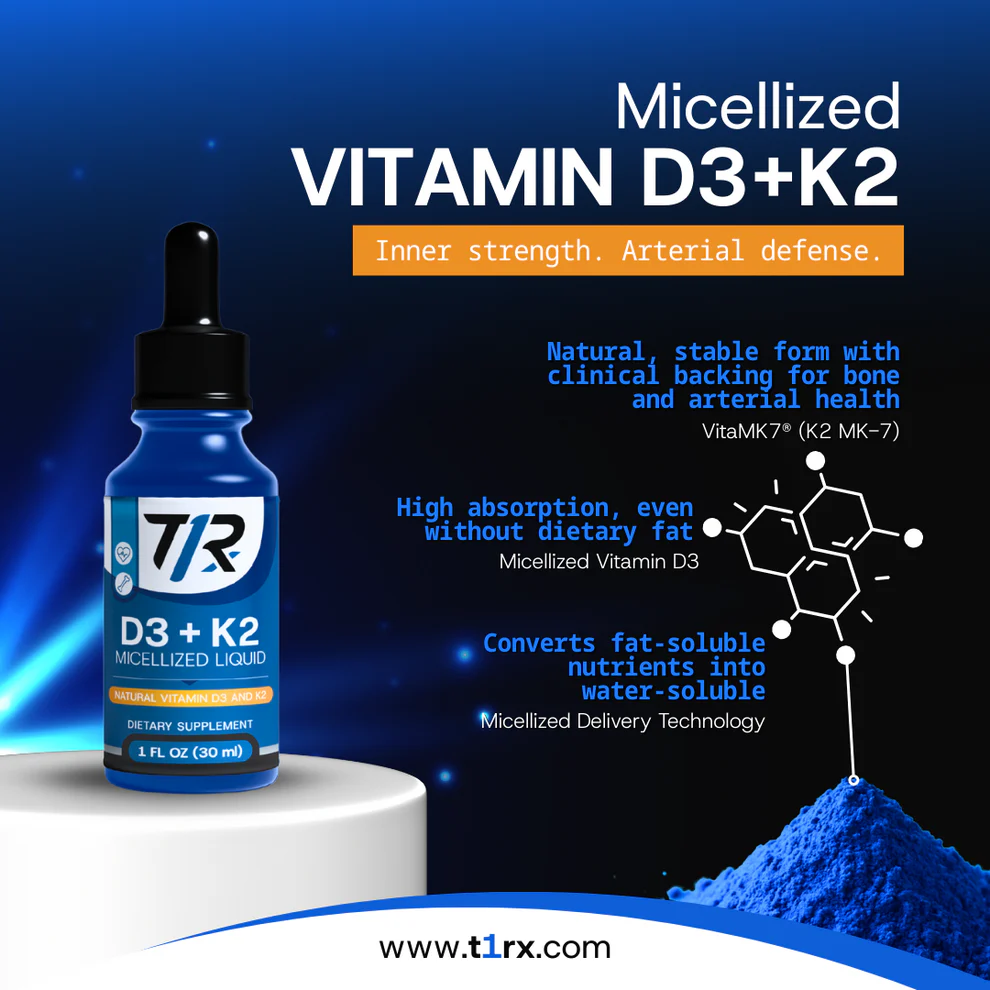
A vitamin D deficiency does not present itself clearly. Symptoms include fatigue that is not alleviated by sleep, a decline in training output with no obvious cause, a lower mood than expected, and slower recovery. Most men who are deficient are unaware of it. They attribute these symptoms to age, stress, or workload and adjust their expectations accordingly.
Low vitamin D levels are a measurable and correctable deficiency that has been shown to affect testosterone production, immune function, bone density, cardiovascular health, and cognitive performance. In most deficient men, it can be addressed by taking the right form of supplementation at the right dose.
This article covers how vitamin D3 and K2 liquid works, why the liquid form matters, the effects of deficiency on performance and recovery, and when supplementation is clinically necessary.
Key Takeaways
- Vitamin D is a steroid hormone precursor and not just a vitamin. Its receptors are present in nearly every tissue, including muscle, brain, and reproductive organs.
- A deficiency in vitamin D has been linked to lower testosterone levels, an impaired immune response, elevated inflammatory markers, and decreased physical performance.
- Specifically, vitamin K2 (MK-7) directs calcium away from arterial tissue and into bone, preventing the vascular calcification that high-dose vitamin D3 supplementation can accelerate.
- Liquid micellized D3 and K2 provide significantly higher bioavailability than oil-based capsules or dry tablets, making them an appropriate delivery method for treating established deficiencies.
- Serum 25-hydroxyvitamin D testing is required to establish a baseline and guide dosing. Supplementing without baseline data is like dosing blindly.
What Vitamin D Actually Does
Although it is commonly called a vitamin, vitamin D3 actually functions as a hormone. After exposure to UVB rays, the body produces cholecalciferol, which the liver and kidneys then convert into its active form. This hormone then binds to vitamin D receptors found in nearly every cell in the body.
This receptor distribution is what makes vitamin D deficiency a systemic problem. When circulating levels are insufficient, the downstream effects appear across multiple systems simultaneously. This explains why the symptom profile of deficiency maps to so many different areas of function.
The connection to testosterone is direct. Vitamin D receptors in Leydig cells are involved in testosterone synthesis. Multiple studies have documented the association between low serum 25(OH)D and low serum total testosterone. A 2011 randomized controlled trial published in Hormone and Metabolic Research found that, compared to placebo, men who took vitamin D supplements for twelve months showed significantly higher testosterone levels. This is not a weak correlation. It is a well-documented hormonal relationship with mechanistic plausibility.
Why K2 Is Not Optional
High-dose vitamin D3 supplementation increases calcium absorption in the intestines. This is part of the intended mechanism that supports bone density and musculoskeletal function. However, the problem is that absorbed calcium needs direction. Without adequate vitamin K2, calcium is absorbed but not reliably deposited in bone tissue. Instead, it accumulates in soft tissue, including arterial walls.
Vitamin K2, especially the fermented MK-7 form, helps direct calcium to the right places. It activates osteocalcin, which moves calcium into bones, as well as matrix Gla protein (MGP), which prevents calcium buildup in arteries. Without sufficient vitamin K2, these proteins cannot function effectively.
For men taking high doses of vitamin D3, vitamin K2 is essential. Long-term D3 supplementation without adequate K2 can increase the risk of arterial calcification. Adding K2 is an easy, inexpensive way to support proper calcium metabolism.
MK-7 is the preferred form of vitamin K2 because it remains active for over 72 hours, compared to just a few hours for MK-4. This provides more consistent benefits with once-daily dosing.
Why Liquid Micellized Form Matters
Vitamin D3 is a fat-soluble compound. When taken in standard oil-based capsules or dry tablets, its absorption depends on concurrent fat intake, adequate bile secretion, and proper gastrointestinal function.
Disruption of these factors reduces absorption. For men with compromised gut function, which is more prevalent in high-stress populations than generally recognized, capsule-based D3 may deliver only a fraction of the labeled dose into circulation.
Micellization encapsulates fat-soluble compounds in water-soluble micelles. These small, spherical structures allow fat-soluble nutrients to be absorbed directly across the intestinal mucosa, bypassing the need for bile-mediated solubilization. The result is substantially higher and more consistent bioavailability compared to oil-based capsules and nearly complete bioavailability compared to dry tablets.
A 2014 study published in the Journal of Clinical Pharmacology demonstrated that micellar vitamin D3 produced significantly higher serum 25(OH)D levels than an oil-based formulation at equivalent doses. For deficient men who need to efficiently correct their circulating levels, the delivery format is a meaningful clinical variable, not just a marketing distinction.
Liquid form also allows for dose flexibility. Therapeutic repletion doses differ from maintenance doses, and the ability to precisely adjust volume makes titration more practical than counting fixed-strength capsules.
What Deficiency Looks Like in Practice
The clinical threshold for vitamin D deficiency is a serum 25(OH)D level below 20 ng/mL. Insufficiency is generally defined as a level between 20 and 29 ng/mL. The optimal functional range for performance and hormonal health in men is generally considered to be between 40 and 70 ng/mL, though some clinicians target the higher end of this range for specific populations.
The prevalence of deficiency is higher than most men expect. Estimates from the CDC and NHANES data suggest that approximately 35 percent of U.S. adults are deficient in vitamin D. In populations with limited outdoor exposure, a higher body mass index (BMI), darker skin pigmentation, or living above the 37th parallel, the rates are substantially higher.
Operating at deficient or insufficient levels can lead to:
- Reduced maximal strength output
- Impaired immune surveillance with increased susceptibility to upper respiratory infection
- Slower tissue repair following training
- An elevated cortisol-to-testosterone ratio
- Reduced insulin sensitivity
None of these effects are dramatic in isolation. However, in combination, over months or years, they represent a meaningful reduction in functional capacity.
When Supplementation Is Indicated
Liquid supplementation of vitamins D3 and K2 is indicated in the following situations:
- Confirmed deficiency by serum testing.
- Inadequate sun exposure.
- Dietary insufficiency.
- Low or declining testosterone in the presence of insufficiency.
- Elevated inflammatory markers or slow recovery.
- Concurrent high-dose D3 supplementation without K2.
Testing Protocol
A baseline serum 25(OH)D test is required before initiating therapeutic doses. Without baseline data, you cannot determine whether supplementation is warranted or assess whether the dose is producing the intended result.
The standard protocol involves a baseline blood draw, initiation of supplementation at an appropriate dose based on the level of deficiency, and a follow-up blood draw 90 days later to confirm repletion and adjust the dose if necessary. Maintenance testing at six-month intervals is appropriate for men in ongoing supplementation protocols.
Toxicity from vitamin D supplementation is possible with very high doses taken over an extended period. Documented toxicity typically involves sustained doses above 10,000 IU daily without clinical indication. Serum calcium levels should be monitored in men taking therapeutic doses over a long period. These are manageable variables with appropriate oversight. They are not reasons to avoid supplementation in deficient individuals.
Frequently Asked Questions
What is the difference between vitamin D3 and vitamin D2?
The human body produces D3 (cholecalciferol) in response to UVB exposure, and it is more effective than D2 (ergocalciferol) at raising serum 25(OH)D levels. D2 is derived from plant sources and is typically used in prescription-grade supplements in the United States.
Why does the form of K2 matter?
MK-7 has a half-life of approximately 72 hours, whereas MK-4 is cleared within hours. This difference in half-life means that MK-7 consistently activates osteocalcin and matrix Gla protein with once-daily dosing. MK-4 requires multiple daily doses to produce comparable effects.
Can I get enough vitamin D from food?
Fatty fish, egg yolks, and fortified foods contain vitamin D3, but not in sufficient concentrations to correct an established deficiency or maintain optimal circulating levels in men with limited sun exposure. Food-based intake may contribute to maintenance in men who are already at adequate levels but is not a reliable primary source for repletion.
Does vitamin D supplementation replace testosterone replacement therapy (TRT)?
No, vitamin D deficiency may contribute to reduced endogenous testosterone production, and correcting the deficiency may improve testosterone levels in some men. However, it does not replace clinically indicated testosterone replacement therapy in men with confirmed hypogonadism.
How long does it take for deficiency correction to produce noticeable effects?
Serum 25(OH)D levels typically respond to supplementation within four to eight weeks at therapeutic doses. As levels normalize, functional improvements in energy, recovery, and mood may follow, though the timeline varies based on the degree of initial deficiency, the dose used, and individual absorption characteristics. Follow-up testing at 90 days provides the most reliable indication of the protocol’s effectiveness.
Disclaimer: This article is intended for general informational and educational purposes only and does not constitute medical advice. Vitamin D supplementation at therapeutic doses requires serum testing and clinical oversight. Consult a licensed healthcare provider before starting or changing a supplementation protocol.