
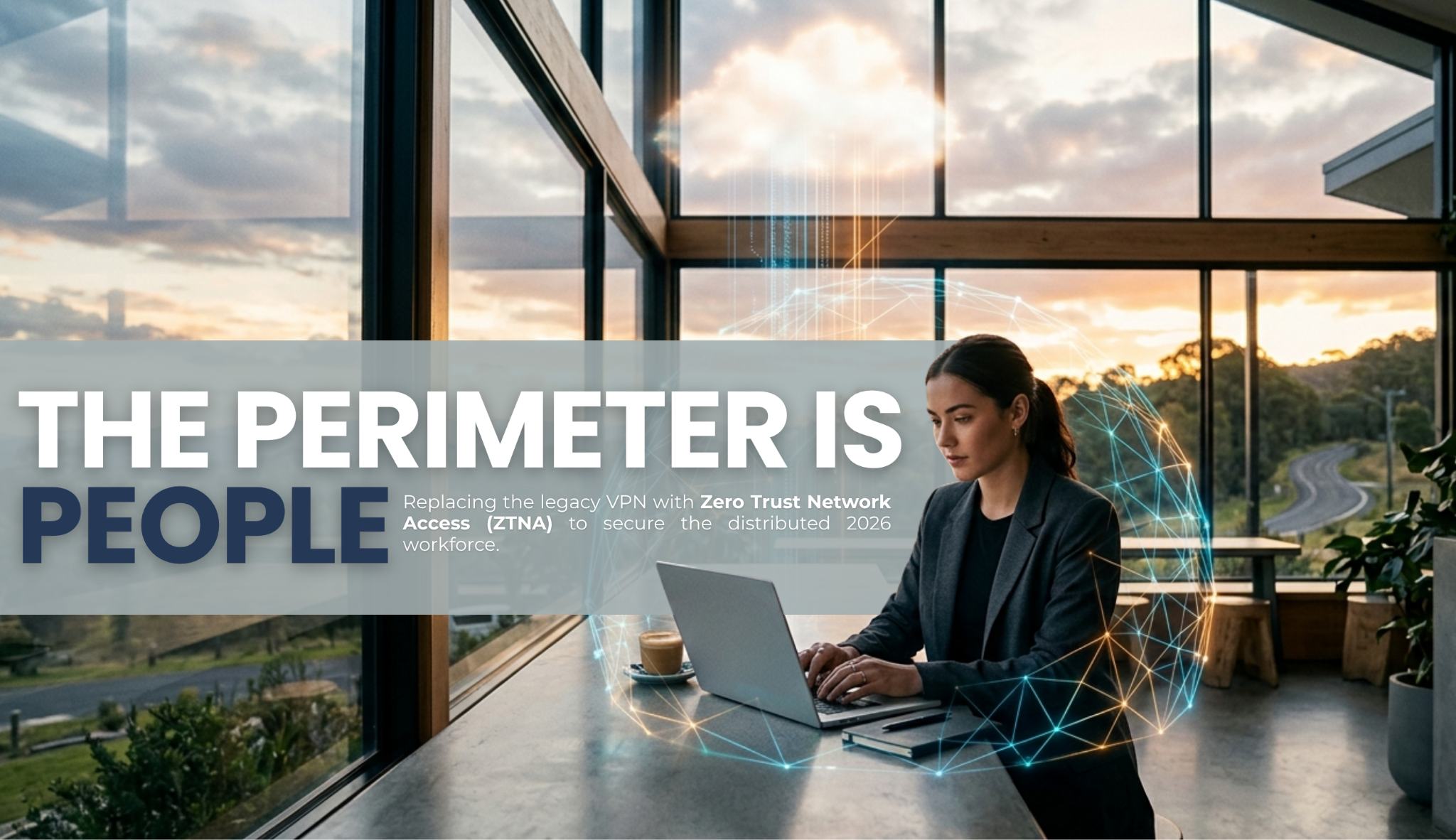
The traditional concept of the corporate network as a fortress—complete with walls, moats, and a single heavily guarded gate—has officially collapsed in 2026. For the modern workplace manager or operations lead, the “perimeter” is no longer a physical office in a Central Business District (CBD); it is a shifting, global constellation of laptops, tablets, and smartphones. In this distributed reality, the legacy Virtual Private Network (VPN) has become a liability, often acting as a bottleneck for productivity and a broad entry point for lateral movement by cyber adversaries. To thrive in this landscape, organizations are moving toward Zero Trust Network Access (ZTNA) as the new gold standard for connectivity. The managed IT services offered by The Missing Link provide a positive and streamlined pathway for firms to transition into this cloud-native future, ensuring that security is tied to the user rather than the location. By leveraging world-class expertise in Zscaler and sophisticated cloud-native networking, these services allow employees to work securely from anywhere by verifying every identity and every device, every single time.
The Myth of Trusted Internet Access
In the early days of remote work, security was based on a simple binary: “Inside” was safe, and “Outside” was dangerous. If you were in the office, you were trusted; if you were at home, you used a VPN to “tunnel” back into that circle of trust. By 2026, we have collectively realized that “trusted internet access” is a dangerous myth. Every connection, whether it originates from a regional home office, a high-speed airport Wi-Fi, or a prestigious CBD headquarters, must be treated as potentially compromised.
The reality of the modern workforce is that the internet is the new corporate network. Applications have migrated to the cloud (SaaS), and data is distributed across multiple environments. When an employee connects to the internet today, they are stepping into a hostile environment. ZTNA operates on the fundamental principle of “Never Trust, Always Verify.” It assumes that the network is already breached and requires continuous validation of the user’s identity, the health of their device, and the context of their request before granting access to specific applications.
Why the VPN is a Relic of the Past
The VPN was designed for an era when 90% of employees were in the office and only 10% were remote. When those numbers flipped, the infrastructure began to buckle. From a management perspective, VPNs are notoriously cumbersome. They require significant hardware maintenance, they often degrade the user experience with high latency, and they provide “all-or-nothing” access. Once a user is through the VPN gate, they often have broad visibility across the internal network, which is exactly what modern attackers look for.
ZTNA replaces this broad access with “least privilege.” Instead of connecting a user to the network, ZTNA connects a user directly to an application. The user never actually “sees” the rest of the network infrastructure. For HR directors and operations leads, this means a smoother onboarding and offboarding process and a significantly reduced risk of accidental data exposure. The transition to a perimeterless workplace is not just a security upgrade; it is a fundamental shift in how we manage the digital employee experience.
Cloud-Native Networking with Zscaler
At the heart of the most successful ZTNA implementations in 2026 is cloud-native networking, with Zscaler leading the pack as a critical enabler. Unlike hardware-based security that requires traffic to be “backhauled” to a central data center, Zscaler operates as a global, cloud-delivered security fabric. This ensures that security follows the user, providing a fast, seamless experience regardless of geographic location.
Experts in cloud-native networking understand that the goal is to get the user to their application as quickly and securely as possible. By utilizing a “Direct-to-Cloud” architecture, organizations eliminate the latency issues that plagued the old VPN model. This is particularly important for high-growth professional services firms where billable hours and employee productivity are the lifeblood of the business. When the technology gets out of the way and just works, the modern workplace becomes truly borderless.
Identity: The New Perimeter
In a perimeterless world, identity is the only thing that matters. In 2026, we no longer verify just a username and password. We look at a multi-dimensional set of signals. Who is the user? What is their role? Where are they connecting from? Is their device running the latest security patches? Is this a normal time for them to be accessing this data?
This continuous verification is what allows a distributed workforce to function safely. If an employee is working from a regional home in the morning and a CBD cafe in the afternoon, the ZTNA system adapts in real-time. If the device’s security posture changes—for example, if a firewall is turned off or malware is detected—access can be revoked instantly. This level of granular control is impossible with legacy networking tools but is a standard feature of modern managed IT services.
The Operations Perspective: Efficiency and Growth
For operations leads, the move to ZTNA and cloud-native networking is a major win for operational efficiency. Building and maintaining physical network infrastructure in multiple offices is expensive and difficult to scale. A cloud-native approach allows a firm to open a new satellite office or hire a team of remote specialists anywhere in the world without having to ship out routers, firewalls, and VPN concentrators.
This scalability is a key driver for high-growth firms. When the barrier to entry for a new location is simply a high-quality internet connection and a managed ZTNA client, the business becomes more agile. You can follow the talent wherever it lives, rather than forcing the talent to move to the infrastructure. This flexibility is a significant competitive advantage in the 2026 talent market.
HR and the Digital Employee Experience
HR directors are increasingly involved in technology decisions because the “digital workspace” is now a primary factor in employee satisfaction and retention. A clunky, slow, and frustrating VPN is a frequent source of “digital friction” that can lead to burnout and disengagement.
A modern ZTNA solution feels invisible to the end-user. They simply open their laptop, and their applications are there, ready to be used. There are no passwords to remember for the VPN, no waiting for the tunnel to establish, and no dropped connections when switching from Wi-Fi to 5G. By removing this friction, HR can ensure that the “modern workplace” actually feels modern. It sends a message to the workforce that the company values their time and understands the reality of their distributed lives.
Verifying the Device Every Time
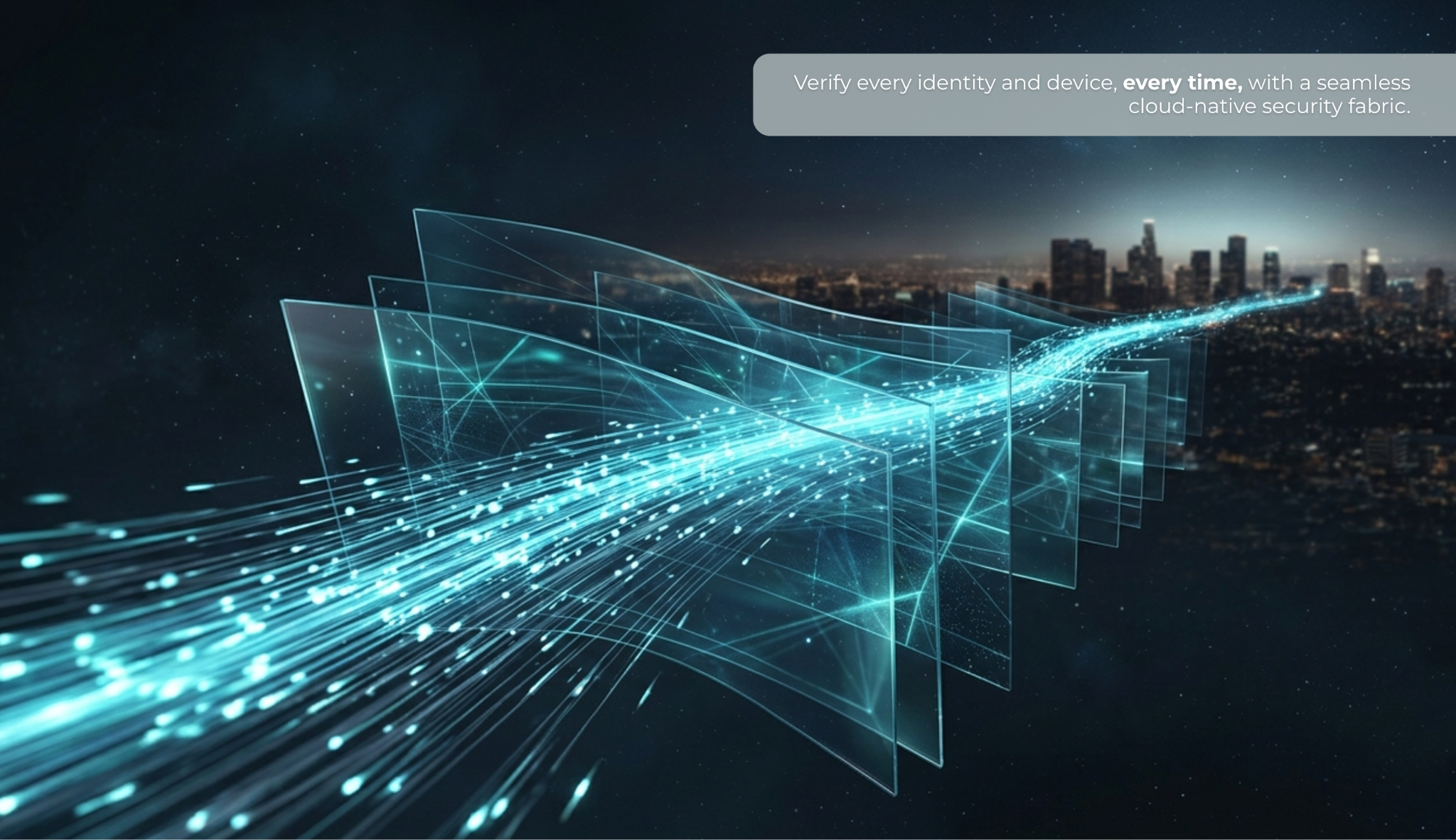
Device health is the second pillar of the Zero Trust model. In a perimeterless workplace, the “Unmanaged Device” is the greatest threat. Employees might be tempted to use a personal tablet or a home PC to check email, but these devices often lack the enterprise-grade security required to protect sensitive data.
Managed services ensure that every device used to access corporate resources is known, tagged, and compliant with company policy. This “Device Posture Check” happens every time a connection is made. If a device fails the check, it is quarantined or given limited access until the issue is resolved. This protects the firm from the risks of “Shadow IT” and ensures that the distributed workforce is not inadvertently bringing threats into the environment.
The Role of Managed Services in 2026
Building a Zero Trust environment is complex. It requires a deep understanding of identity providers, cloud architecture, and network security. For many mid-market and high-growth firms, trying to build this in-house is a recipe for disaster. This is where the value of a specialized partner becomes clear.
Managed services provide the “security-as-a-service” model that modern firms need. They offer the 24/7 monitoring, the expert configuration of Zscaler policies, and the constant fine-tuning of the ZTNA environment. This allows the firm’s internal team to focus on strategic growth and client service, rather than fighting with network logs and VPN certificates. In the 2026 reality, a managed approach is not just a luxury; it is the most efficient way to maintain a perimeterless workplace.
Case Study: From CBD to Regional Home
Consider a professional services firm that moved to a fully distributed model in 2025. Their team is split between a small “hub” office in the Sydney CBD and various regional homes across Australia. Before ZTNA, their regional staff struggled with slow VPN connections and frequent lockouts, while their CBD staff felt the “office network” was overly restrictive.
After transitioning to a cloud-native ZTNA model, the experience became uniform for everyone. The regional home worker now accesses the firm’s specialized modeling software at the same speed as someone sitting in the CBD hub. The security team has full visibility into every connection, regardless of where it starts. If an employee travels to a client site, their access follows them seamlessly. This is the “Perimeterless Workplace” in action: a single, secure environment that exists wherever the people are.
Conclusion: Embracing the Future of Work
The shift toward Zero Trust Network Access is an inevitable evolution of the modern workplace. The perimeter has moved from the office wall to the user’s identity, and the network has moved from the private data center to the global cloud. Organizations that cling to the VPN and the myth of “trusted internet” will find themselves burdened by security risks and operational inefficiencies.
By focusing on ZTNA and cloud-native networking, firms can create a workplace that is truly distributed, highly secure, and exceptionally productive. It requires a commitment to verifying every identity and device, every time, but the reward is a perimeterless workplace that can grow as fast as the firm’s ambitions. As we navigate the complexities of 2026, the firms that embrace this “Never Trust, Always Verify” mindset will be the ones that attract the best talent and deliver the most secure, reliable services to their clients. The walls are gone; it’s time to secure the people.

