
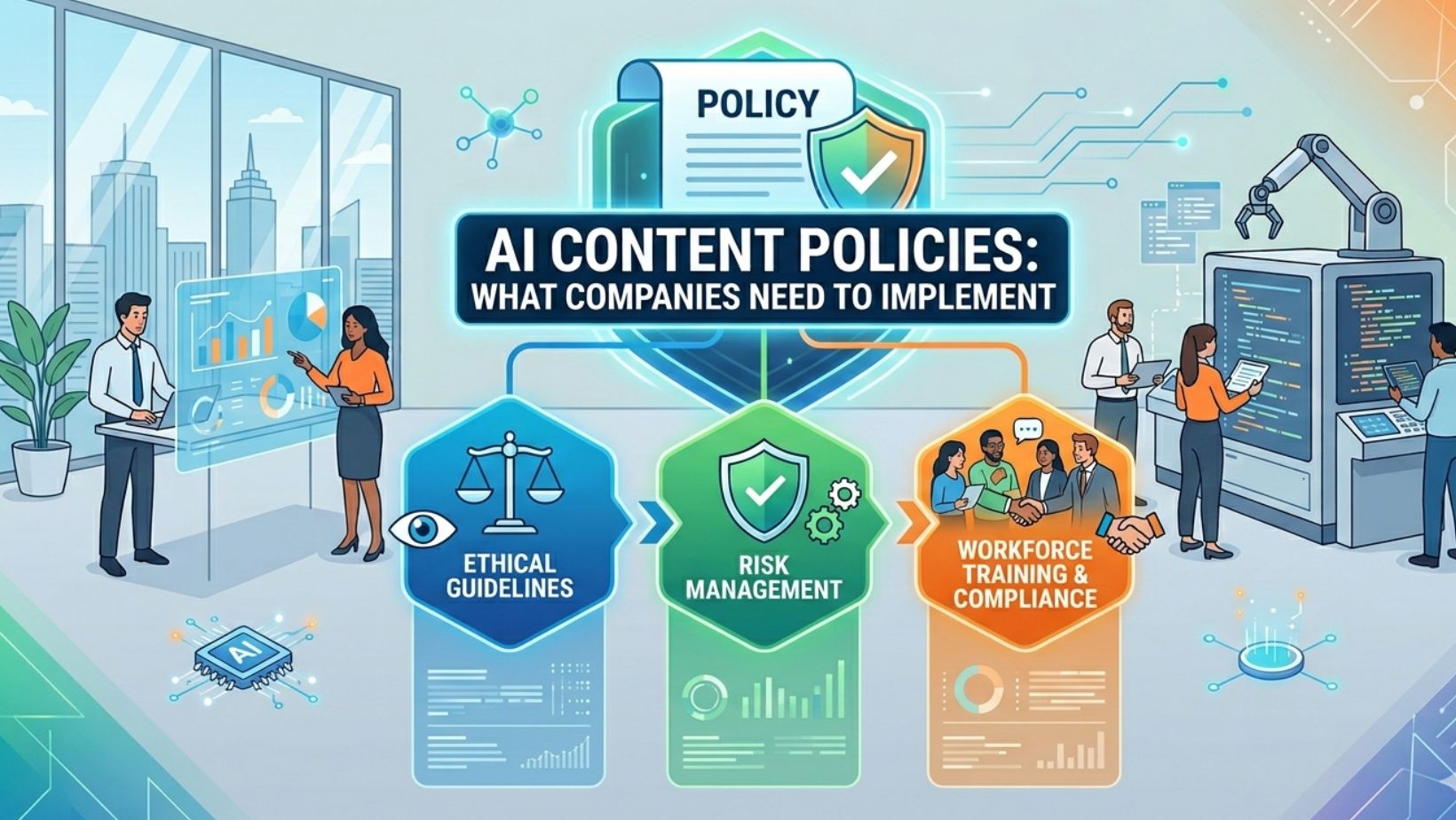
Artificial intelligence is transforming how businesses create, publish, and manage content. From marketing copy to customer support responses, AI tools can boost efficiency and scale like never before. However, without clear policies, companies risk inconsistency, legal issues, and damage to their brand reputation. A well-defined AI content policy helps organizations stay in control while still benefiting from automation.
This guide breaks down the essential elements companies should implement to ensure their AI-generated content is accurate, ethical, and aligned with business goals.
Why AI Content Policies Matter
AI tools can generate content quickly, but they do not fully understand context, brand voice, or compliance requirements on their own. Without guidelines, teams may produce content that is misleading, off-brand, or even harmful.
An AI content policy provides structure. It ensures that everyone in the organization uses AI responsibly and consistently. It also helps build trust with audiences by maintaining transparency and quality across all content channels.
Define Clear Usage Guidelines
The first step is to clarify how AI tools should be used within your organization. Not every task should be automated, and not every employee should use AI in the same way.
Companies should clearly define:
- Which types of content can be generated with AI, such as blog drafts, product descriptions, or internal documents
- Which tasks require human-only input, such as legal content or sensitive communications
- Approved AI tools and platforms that employees are allowed to use
- Data input rules to prevent sharing confidential or proprietary information
For example, a marketing team might use AI to generate first drafts of articles, while the legal team avoids AI entirely due to compliance risks. Clear boundaries prevent misuse and confusion.
Establish Content Analysis and Approval Processes
Even the most advanced AI systems can make mistakes. That is why human oversight is essential. Every piece of AI-generated content should go through a review process before publication.
A strong review workflow includes:
- Fact-checking information for accuracy
- Editing for tone, clarity, and brand consistency
- Checking for plagiarism or duplicated content
- Ensuring compliance with legal and ethical standards
For instance, if AI generates a blog post with outdated statistics, a human editor should catch and correct it before publishing. This step protects both credibility and audience trust.
Maintain Brand Voice and Consistency
AI-generated content often lacks personality unless guided properly. Companies need to define and enforce a consistent brand voice across all outputs.
Start by creating a detailed style guide that includes tone, preferred vocabulary, and formatting rules. Then train employees to refine AI-generated drafts so they match these standards.
In some cases, businesses use tools like an AI Humanizer to refine robotic text and make it sound more natural and engaging. This approach helps maintain authenticity while still benefiting from AI efficiency.
Consistency is key. Whether content is written by a human or generated by AI, it should feel like it comes from the same brand.
Address Ethical and Legal Considerations
AI content policies must include clear ethical and legal guidelines. This is especially important as regulations around AI continue to evolve.
Key areas to address include:
- Transparency about AI-generated content when required
- Avoidance of biased, offensive, or misleading language
- Compliance with copyright laws and intellectual property rights
- Protection of user data and privacy
For example, if an AI tool generates content based on copyrighted material, companies must ensure they are not violating any laws. Similarly, businesses should monitor outputs for unintended bias that could harm certain groups.
Ethical AI use is not just about avoiding risk. It also strengthens brand credibility and builds long-term trust with customers.
Train Teams and Encourage Responsible Use
Even the best policy will fail if employees do not understand how to apply it. Training is essential for successful implementation.
Organizations should provide:
- Hands-on training sessions for AI tools
- Clear documentation and examples of proper use
- Regular updates as tools and regulations evolve
Encourage employees to think critically when using AI. They should treat it as a support tool rather than a replacement for human judgment.

For example, a content writer might use AI to brainstorm ideas but still rely on their expertise to shape the final message. This balance ensures quality and originality.
Monitor Performance and Continuously Improve
AI content policies should not remain static. As technology evolves, companies need to regularly review and update their guidelines.
Track key performance indicators such as:
- Content engagement rates
- Error frequency in AI-generated content
- Time saved through automation
- Feedback from customers and internal teams
If issues arise, adjust the policy accordingly. For instance, if AI-generated content frequently requires heavy editing, it may signal a need for better prompts or stricter review processes.
Continuous improvement ensures that your AI strategy remains effective and aligned with business goals.
Conclusion
AI offers powerful opportunities for content creation, but it also requires careful management. By implementing clear policies, companies can harness AI’s benefits while minimizing risks.
Start with defined guidelines, enforce strong review processes, and invest in training your team. With the right approach, AI can become a reliable partner in your content strategy, helping you scale efficiently without compromising quality or trust.