Fiberglass manufacturing plays an important role in many industries today, including construction, infrastructure, marine, and industrial production. The demand for fiberglass products keeps growing, and manufacturers are constantly on the lookout for more advanced tools and production systems to improve their product quality and efficiency.
In this day and age, fiberglass manufacturing is no longer just about manual processes. Automated production lines, precision tooling, and controlled resin systems help manufacturers produce consistent results at scale. By choosing the right tools, manufacturers can reduce waste, speed up their production, and, overall, improve the reliability of their products.
Top 3 Tools for Fiberglass Manufacturing
Below, we will be exploring the top three companies known for providing advanced tools and solutions for fiberglass manufacturing.
- Composite-Tech
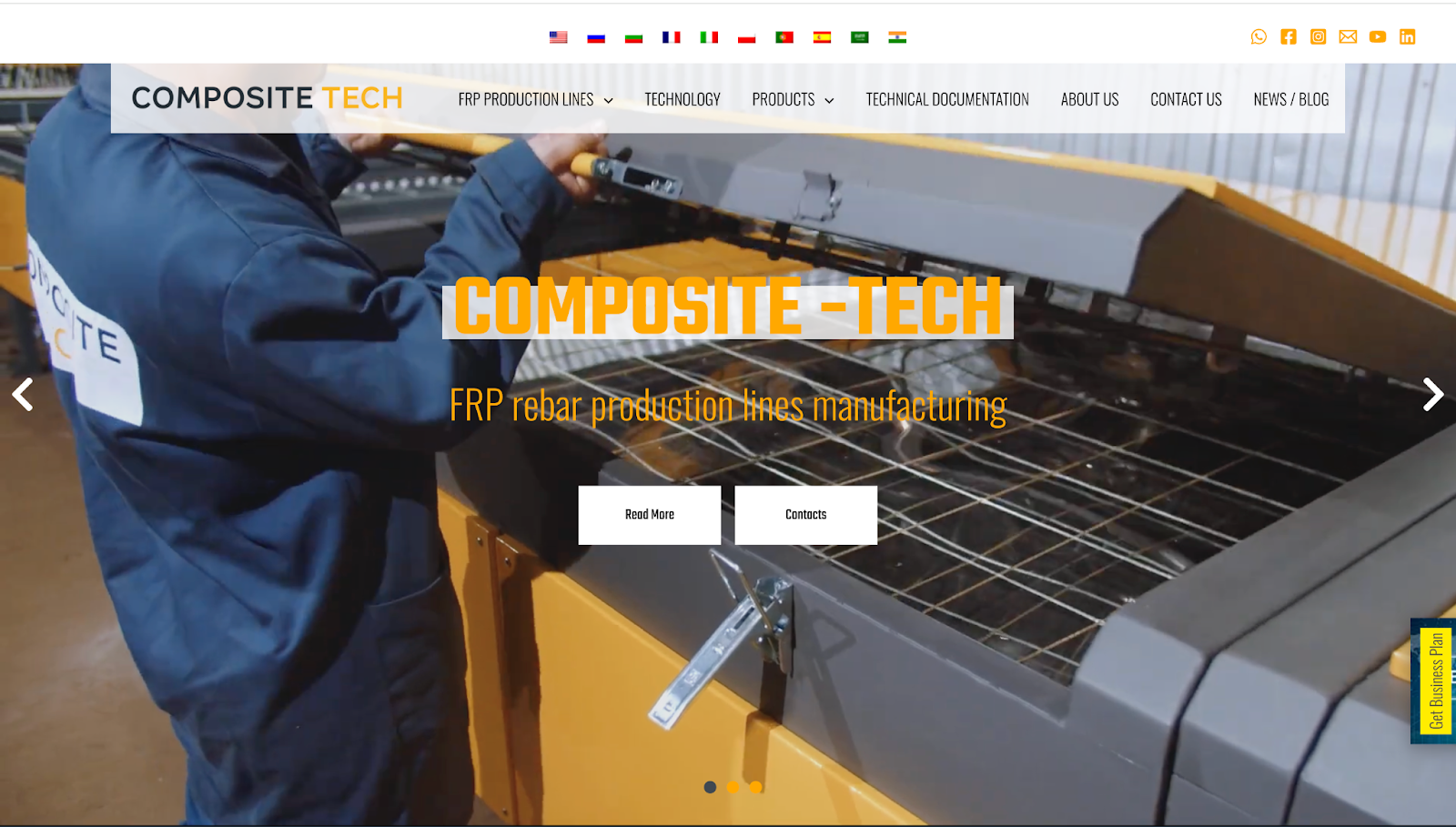
Composite-Tech focuses on the design and manufacturing of turn-key fiberglass and basalt rebar production lines. The company works mainly with construction and infrastructure manufacturers that are looking to replace their traditional steel reinforcement with composite alternatives.
Composite-Tech has been developing FRP production technology for over a decade now, and supplies its equipment to customers around the world.
Key Features
- Turn-Key GFRP Production Lines
Composite-Tech provides fully automated production lines for GFRP rebar, reinforcement mesh, and bent elements. These systems are designed to run continuously and reduce the need for any manual labor.
- Wide Range of FRP Production Equipment
In addition to rebar, the company also supplies production lines for FRP pipes, tanks, composite silos, and profiles. This allows manufacturers to produce different fiberglass products by using similar technology.
- Automation and Efficiency
The production lines are built to support stable output and consistent quality. Moreover, they use automation to help reduce errors, improve repeatability, and support higher production volumes without losing quality.
- Fiberglass and Basalt Reinforcement
Composite-Tech’s equipment supports both fiberglass and basalt fiber materials, as mentioned before. These materials are corrosion-free, lightweight, non-conductive, and are often used in environments where steel reinforcement is a less suitable option.
- Global Standards Awareness
The company references international design and construction standards related to FRP reinforcement, which can help manufacturers operate in regulated construction markets.
- Symmetrix Composite Tooling
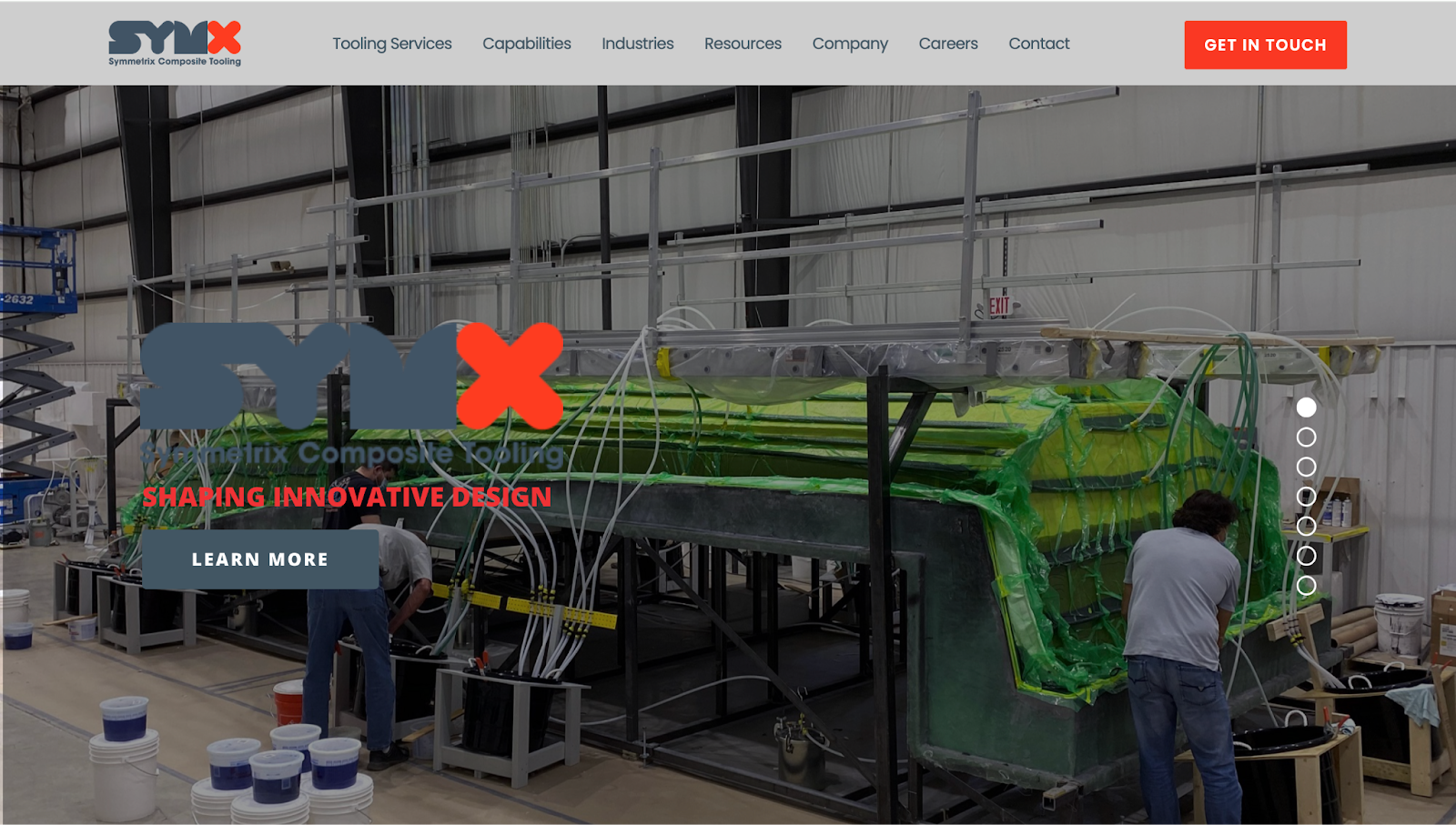
Symmetrix Composite Tooling specializes in precision tooling and mold manufacturing for fiberglass and advanced composite parts. The company focuses on helping manufacturers produce accurate, high-quality components while ensuring consistent results.
Key Features
- Custom Composite Molds
Symmetrix designs and builds custom molds used in fiberglass manufacturing processes such as resin transfer molding (RTM) and other closed-mold techniques.
- Advanced CNC Machining
The company also uses CNC and 5-axis machining to create tooling with tight tolerances and smooth surface finishes.
- Durable Production Tooling
Symmetrix produces tooling designed for repeated production cycles and, where required, elevated-temperature curing processes. This can help manufacturers maintain quality even in more demanding production environments.
- Multiple Industry Applications
The tooling that Symmetrix provides is used across different industries such as aerospace, marine, transportation, infrastructure, and architectural composites. In most of these industries, fiberglass components must meet strict performance and aesthetic standards.
- Composite Integration
Composite Integration provides equipment, tooling support, and process expertise for composite and fiberglass manufacturing. The company focuses on helping manufacturers optimize their production methods overall, rather than just supplying individual tools.
Key Features
- Support for Advanced Manufacturing Processes
Composite Integration supplies equipment for fiberglass processes like vacuum infusion, resin transfer molding (RTM), and other controlled resin delivery techniques.
- Standard and Custom Equipment
The company offers both ready-made systems as well as customized solutions based on specific manufacturing needs. This makes it a suitable option for both scaling operations and process refinement.
- Process Development Support
Composite Integration works with manufacturers to help refine production processes and focus on improving consistency, reducing material waste, and increasing effectiveness.
- Used Across Multiple Industries
Like with the other companies, Composite Integration’s equipment and support services are also used in different sectors such as aerospace, automotive, marine, and renewable energy.
Choosing the Right Advanced Tools for Your Operation
When selecting fiberglass manufacturing tools or technology partners, manufacturers should consider:
- Production Volume Requirements
High-volume operations may benefit from automated production lines, while lower-volume or specialized products may require precision tooling.
- Type of Product
Rebar, pipes, tanks, and molded parts each require different tooling and process setups.
- Compliance Requirements
Manufacturers working in construction or infrastructure should ensure their tools support compliance with relevant standards.
- Scalability and Support
Tools that can grow with production demand and are supported by experienced engineering teams help reduce long-term risks.
Conclusion
There is no doubt that advanced tools play a huge role in modern fiberglass manufacturing. Whether it’s fully automated FRP production lines from Composite-Tech, precision composite tooling from Symmetrix, or process optimization support from Composite Integration, each solution serves a different role within the fiberglass manufacturing ecosystem.
By choosing the best combination of tools based on your production goals and industry requirements, you can not only improve quality but also reduce production waste and build high-quality fiberglass products that are reliable and consistent over time.