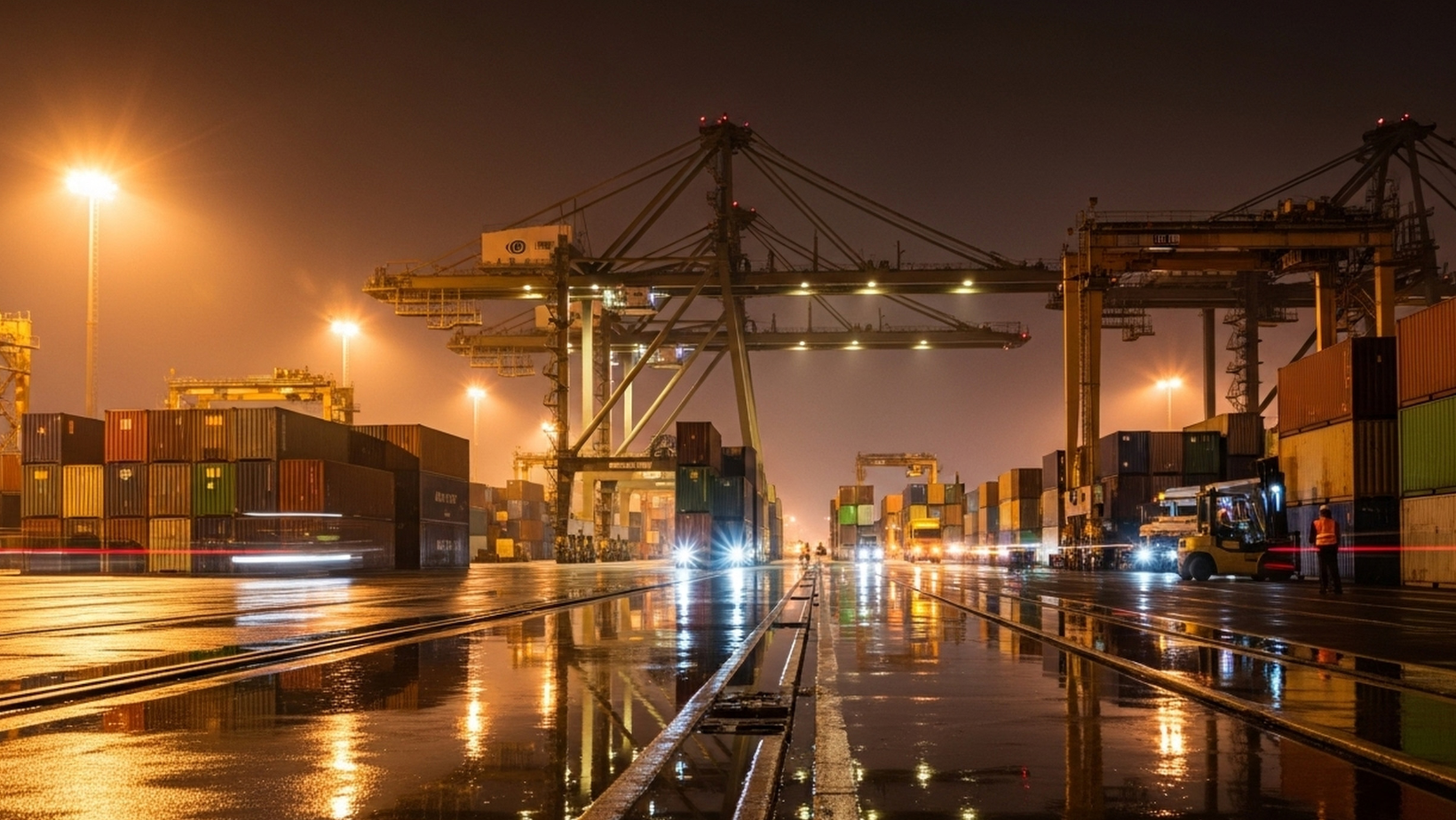
A container ship arrives at port carrying 18,000 twenty-foot equivalent units. Cranes need to unload specific containers destined for immediate rail transfer while leaving others that will sit in the yard for weeks. Yard operators need to stack containers efficiently so retrieval doesn’t require moving dozens of boxes to reach one. Trucks arrive expecting quick pickup but end up waiting hours because nobody can locate their container in a yard covering hundreds of acres.
These scenarios play out daily at ports worldwide, costing billions in delayed shipments, wasted fuel from idling trucks, and underutilized equipment. The core problem isn’t lack of technology—ports have invested heavily in automation. The issue is information flow. When systems don’t know exactly where every container is at every moment, even the most sophisticated cranes and straddle carriers can’t operate efficiently.
What Actually Slows Down Port Operations
Vessel turnaround time determines how much cargo a port can handle annually. Every hour a ship sits at berth waiting to finish loading or unloading represents lost revenue for carriers and delayed goods for shippers. Ports that can consistently turn vessels around faster attract more business, while those with slow operations lose customers to competitors.
The bottleneck often happens in the yard rather than at the quayside. Cranes can move containers from ship to shore quickly, but if yard operations can’t keep pace, boxes pile up in staging areas blocking further progress. Conversely, when vessels are ready to load but containers aren’t positioned near the berth, cranes sit idle while equipment scrambles to relocate boxes from deeper in the yard.
Manual tracking creates these problems. Clerks record container numbers, row positions, and stack locations, but this information gets outdated the moment equipment starts moving boxes around. When a truck driver arrives with a pickup order, gate staff checks the system, sends them to a specific location, but the container has already been relocated due to other operations. The driver wastes 30 minutes searching or waiting for clarification while dozens of other trucks queue behind them.
Mis-stacked containers compound delays exponentially. When operators don’t have accurate information about which containers need retrieval soon versus which will sit for weeks, they make stacking decisions that require extensive reshuffling later. Moving four containers to access one buried in a stack might take 20 minutes—time that multiplies across hundreds of daily retrievals.
How Modern Tracking Changes the Game
Real-time location data transforms port operations by eliminating the information lag that creates inefficiency. Implementing RFID container tracking solutions provides automatic position updates as containers move through the facility without requiring manual scanning or data entry. Readers installed on cranes, straddle carriers, and at key yard locations capture container movements continuously, updating systems instantly.
This visibility enables intelligent stacking strategies that minimize future handling. The system knows which containers have near-term outbound bookings and positions them for easy access, while boxes with distant departure dates go into deeper stacks. When priorities change—a shipment suddenly becomes urgent or a vessel schedule shifts—operators can quickly locate and reposition containers before they become buried under others.
Gate operations speed up dramatically when drivers receive accurate locations and container availability in real time. Rather than arriving to find their container isn’t ready or can’t be located, drivers get notifications about pickup windows based on actual yard operations. This coordination reduces truck queues, cuts dwell time, and improves relationships with drayage companies who appreciate predictable operations.
Crane productivity improves when operators know exactly which containers to pick and their precise locations. Instead of pausing while someone verifies positions or searches for boxes, crane operations flow smoothly through optimized sequences. Some ports have increased crane moves per hour by 15-20% simply by eliminating the micro-delays that manual verification creates.
Yard Management Systems That Actually Deliver Results
Integration between tracking hardware and yard management software creates the intelligence layer that optimizes operations. These systems don’t just record where containers are—they analyze patterns, predict bottlenecks, and suggest optimal positioning strategies based on incoming vessel schedules, rail departures, and truck appointment systems.
Dynamic slot allocation replaces static yard plans that become obsolete within hours. The system continuously recalculates optimal container positions based on current conditions rather than following predetermined patterns. When a vessel arrives early, experiences equipment delays, or has last-minute cargo changes, the system adapts stacking plans in real time rather than forcing operations to work around an outdated plan.
Equipment routing algorithms ensure cranes, reach stackers, and straddle carriers aren’t duplicating effort or blocking each other. When multiple pieces of equipment operate in the same area, the system coordinates their movements to prevent congestion while maximizing throughput. This becomes especially critical during shift changes when inexperienced operators might not instinctively recognize potential conflicts.
Predictive analytics help ports anticipate congestion before it develops. By analyzing historical patterns and current operations, systems can identify when certain yard sections will become overcrowded or when gate queues will spike. This gives operators time to adjust stacking strategies, open additional lanes, or communicate delays to trucking companies before problems cascade.
Integration That Extends Beyond the Port Gate
Modern port operations don’t exist in isolation—they’re nodes in global supply chains where delays ripple outward affecting manufacturers, retailers, and consumers. Information about container locations and availability needs to flow seamlessly to shipping lines, freight forwarders, and beneficial cargo owners so everyone can plan accordingly.
API connections between port systems and external platforms enable this visibility. When a container clears customs and becomes available for pickup, that status update can trigger automatic notifications to trucking companies and update shipper dashboards. This eliminates the phone calls, emails, and website checking that waste administrative time while improving the customer experience.
Vessel stowage planning benefits from accurate data about which containers are actually available in the yard and ready for loading. When ship planners develop stowage plans weeks in advance but work from inaccurate information about container positions and availability, the plans fall apart at execution time. Real-time data keeps stowage plans synchronized with yard reality.
Rail coordination becomes tighter when ports share container status with rail operators. Intermodal containers destined for rail transfer need to be available when trains are ready to load. When container tracking systems integrate with rail scheduling platforms, both sides can optimize their operations around accurate timing rather than building in excessive buffers for uncertainty.
What Implementation Actually Requires
Technology deployment is the easy part—changing operational processes and building staff confidence in new systems takes longer. Ports need to run parallel operations during transitions, validating that automated tracking matches manual records until accuracy rates prove reliability. This verification period prevents the chaos that happens when organizations abandon old systems before new ones are fully trusted.
Training extends beyond teaching people how to use software. Operators need to understand why accurate data matters and how their actions affect system reliability. When crane operators consistently trigger readers properly or yard workers report exceptions that automated systems can’t detect, data quality stays high and decision-making remains sound.
Maintenance programs for tracking infrastructure require attention that some ports underestimate. Harsh marine environments with salt spray, heavy vibration, and extreme temperatures challenge hardware durability. Regular inspection and rapid repair of damaged readers or tags prevents the blind spots that undermine tracking accuracy.
Ports that successfully implement comprehensive tracking and yard management systems gain competitive advantages that attract volume. Faster vessel turnarounds, shorter truck wait times, and more predictable operations create tangible value that customers notice and reward with their business.